 Skip to content

Common Mistakes in Restaurant Buildouts
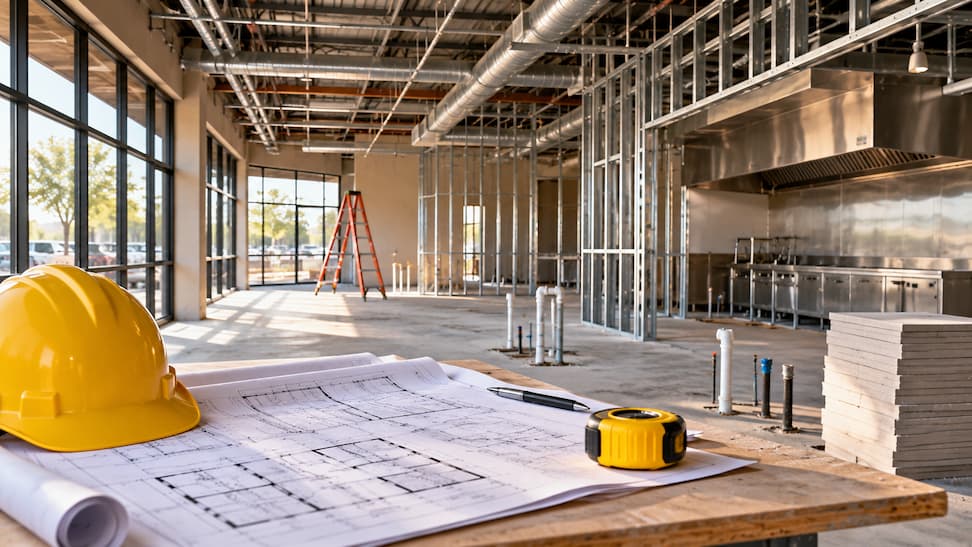
Restaurant development continues to expand across Texas as growing communities support new dining concepts and expanding brands.
Many restaurant locations today follow established prototype designs, particularly in the quick-service restaurant (QSR) sector. These standardized systems often streamline the construction process, although coordination during tenant buildouts still requires careful planning.
Why the Buildout Phase Deserves Early Attention
While developers often focus on site selection and shell construction during early planning, the tenant buildout phase ultimately determines how quickly a restaurant moves toward opening day.
Restaurant interiors involve specialized equipment, mechanical systems, and operational layouts that require careful coordination during construction.
After decades working on retail and restaurant construction in Texas, we’ve seen that restaurant buildouts tend to run most smoothly when a few common coordination challenges are addressed early.
Understanding these challenges can help developers and tenants avoid delays during the final stages of construction.
Working as a restaurant contractor in Texas on both prototype and independent concepts, we’ve found that most buildout delays aren’t caused by the work itself. They come from decisions that were still open when construction began.
1. Waiting Too Long to Finalize Kitchen Equipment
Kitchen equipment plays a major role in restaurant construction because it influences electrical loads, gas service, ventilation, and plumbing infrastructure.
In many quick-service restaurant (QSR) concepts, equipment packages are standardized and determined early by the franchise brand. This level of standardization typically allows the construction team to coordinate infrastructure requirements well in advance.
However, in independent restaurants or chef-driven concepts, equipment selections sometimes evolve later in the design process as menus and operational layouts are refined.
When equipment specifications change late in the process, adjustments may be required to:
- Electrical service capacity
- Gas connections
- Ventilation systems
- Plumbing infrastructure
Confirming equipment requirements early helps construction teams coordinate these systems more efficiently.
What to Confirm Before Construction Begins
Before the buildout starts, it helps to have an equipment schedule that lists each piece of equipment with its electrical, gas, water, and exhaust requirements. That schedule becomes the reference point for the MEP design, the utility connections from the shell, and the ventilation layout.
For independent concepts still refining the menu, even confirming the main cooking line and refrigeration early gives the construction team enough to plan the infrastructure around.
2. Underestimating Mechanical and Ventilation Coordination
Restaurant ventilation systems require careful coordination between mechanical systems, structural framing, and fire suppression components.
For many QSR brands, hood systems and ventilation layouts are already well established through standardized prototype designs. This standardization often helps streamline the coordination process during construction.
In contrast, independent restaurants and custom dining concepts may require more tailored ventilation systems to support unique kitchen layouts and cooking equipment.
When ventilation design evolves during construction, multiple trades may need to adjust their work simultaneously.
Early coordination between the design team and construction team helps reduce these challenges.
3. Incomplete Coordination Between Shell Construction and Tenant Design
With today’s development model, many restaurant locations begin with a developer constructing a single-tenant shell building, followed by a tenant interior buildout.
While this model offers flexibility, it requires clear coordination between:
- The shell building infrastructure
- The tenant’s interior design
- Equipment layout and utility connections
When the shell construction team and tenant construction team work closely together, especially under a hand-in-glove approach [add internal link to the hand-in-glove article], this coordination tends to occur more efficiently.
When communication between those phases is limited, additional adjustments may occur once interior work begins.
4. Delays in Permitting or Health Department Reviews
Restaurant interiors often require additional review compared to other retail tenants. These reviews may include:
- Health department approvals
- Kitchen equipment review
- Ventilation system verification
- Grease interceptor compliance
Each jurisdiction may handle these approvals slightly differently. Understanding local requirements early helps prevent unexpected delays during the later stages of construction.
Building Review Time Into the Schedule
Because several of these reviews must be cleared before key stages of work can move forward, the time they take should be part of the construction schedule from the start, not an afterthought.
An experienced restaurant contractor in Texas will typically confirm each jurisdiction’s submittal requirements early, including equipment specifications, ventilation details, and grease interceptor sizing, so reviews are not held up by missing information.
5. Opening Dates That Leave No Room for Adjustments
Restaurant openings are often tied to:
- Franchise launch timelines
- Marketing campaigns
- Seasonal demand
- Lease commitments
Because of this, restaurant construction schedules are often compressed.
When projects allow little flexibility between construction completion and opening day, even small adjustments during the buildout phase can create pressure on the schedule.
Developers and tenants who account for these realities during planning often find it easier to maintain realistic opening timelines.
In our experience, even a short buffer between construction completion and opening day gives the team room for final inspections, equipment start-up, and staff training without putting the opening at risk.
A Pattern We Often See
Across restaurant buildouts in Texas, projects tend to move most smoothly when the construction team becomes involved early in the planning process.
When contractors can review kitchen layouts, equipment packages, and infrastructure requirements before construction begins, coordination between trades becomes much easier during the buildout phase.
In projects where the construction team is brought in later, after design decisions are already finalized, adjustments during construction sometimes become more likely.
That difference in timing can influence how smoothly a restaurant moves from construction to opening day.
Why Early Coordination Matters
Restaurant buildouts require coordination between several different disciplines. Successful projects typically involve early collaboration between:
- Developers
- Restaurant operators
- Design professionals
- Construction teams
When these groups align early in the planning process, construction teams can focus on execution rather than adjustments.
The Bigger Picture
Restaurant construction remains one of the most specialized areas of commercial construction in Texas.
Even though many restaurants begin with developer-built shell structures today, the interior buildout phase still requires careful coordination between equipment, utilities, and construction sequencing.
When developers and tenants address these elements early, restaurant projects tend to progress toward opening day more predictably.
Final Thought
Restaurant buildouts involve a combination of infrastructure coordination, equipment installation, and operational planning.
When developers, tenants, and construction teams communicate early and clearly, the final stages of construction tend to move forward with fewer surprises.
That early coordination often makes the difference between a stressful buildout and a smooth path toward opening day.
Developer Conversation
If you’re planning restaurant development in Texas and want to discuss tenant buildouts, shell coordination, or construction scheduling, those conversations are often most valuable early in the planning process.
Wyatt Management has supported commercial construction in Texas for decades, including retail and restaurant construction in Texas, as well as medical and educational facilities.
We’re always open to discussing development plans and sharing perspective based on our experience working on commercial development projects across Texas.
No pressure. Just clarity.
Frequently Asked Questions
What is a restaurant buildout?
A restaurant buildout is the interior construction that turns a shell building or empty space into a working restaurant. It typically includes kitchen infrastructure, hood and ventilation systems, electrical, gas, and plumbing work, grease interceptor connections, equipment installation, and interior finishes. On many projects today, it follows a developer-built shell.
What are the most common mistakes in restaurant buildouts?
The most common issues are finalizing kitchen equipment too late, underestimating ventilation and mechanical coordination, limited coordination between shell construction and tenant design, not planning for permitting and health department reviews, and setting opening dates that leave no room for adjustments. Most of these can be reduced by involving the construction team early.
Why does kitchen equipment need to be finalized early?
Kitchen equipment drives electrical loads, gas service, ventilation, and plumbing infrastructure. When equipment specifications change late, those systems may need to be adjusted after work has already started. Confirming the equipment package early lets the construction team size and route infrastructure correctly the first time.
How is a prototype restaurant buildout different from an independent one?
Prototype buildouts, common with QSR brands, usually come with standardized equipment packages, hood systems, and ventilation layouts determined early by the franchise brand. Independent and chef-driven concepts often refine menus, equipment, and kitchen layouts later in design, and may need more tailored ventilation systems, so early coordination becomes even more important.
Who is responsible for a restaurant buildout, the landlord or the tenant?
It depends on the lease. Commonly, the landlord or developer delivers the shell, and the tenant is responsible for the work that makes it a restaurant, such as the kitchen, hood systems, grease interceptor, and finishes. Because the meaning of “shell” can vary, it helps to have the lease define exactly what infrastructure will be in place at handover.
What approvals does a restaurant buildout need?
Requirements vary by jurisdiction, but restaurant interiors often need health department approvals, kitchen equipment review, ventilation system verification, and grease interceptor compliance, in addition to standard building permits and inspections. Understanding local requirements early helps prevent unexpected delays during the later stages of construction.
When should a contractor get involved in a restaurant buildout?
Ideally before design decisions are finalized. When contractors can review kitchen layouts, equipment packages, and infrastructure requirements before construction begins, coordination between trades becomes much easier. When the construction team is brought in later, adjustments during construction become more likely.
How do you choose the right contractor for a restaurant buildout in Texas?
Look for a contractor with direct experience in restaurant infrastructure, including kitchen ventilation, grease interceptors, and equipment coordination. Experience with both prototype and independent concepts, familiarity with local Texas jurisdictions, and the ability to coordinate shell and tenant phases all matter. A restaurant contractor in Texas who gets involved during preconstruction can help avoid many of the mistakes above.
Recent Commercial Lean Construction Projects in Texas
Wyatt Management has delivered lean-focused commercial work across Texas, including:
-
 Restaurant remodels and buildouts
-
Retail tenant improvements
-
Educational renovations
-
Health & Fitness upgrades
-
Automotive interior projects